RFE
07 Aug 2025, 04:13 GMT+10
An updated trade deal between the European Union and Ukraine spells bad news for Kyiv, signals the power of the bloc's agricultural lobby, and gives an ominous sign of just how tricky it will be for the war-torn country to eventually become an EU member.
The deal, which was preliminarily agreed between Brussels and Kyiv in late June, has now been firmed up with a concrete European Commission proposal, seen by RFE/RL, that EU member states are expected to endorse in early September when they return from the summer recess.
Essentially, it is an update of the Association Agreement that Ukraine signed in 2014 and its free-trade component (known in EU parlance as the Deep and Comprehensive Free Trade Agreement) that entered into force in 2016. In 2021, Ukraine asked for the agreement to be renegotiated on more favorable terms, likely meaning higher export quotas, but the proceedings were interrupted by Russias full-scale invasion of the country in February 2022.
To support Kyiv, the European Union immediately offered completely tariff-free access to the bloc for Ukrainian products, known as Autonomous Trade Measures (ATMs). The ATMs were prolonged for another year in 2023 and again for the last possible time in 2024, before they officially expired in June.
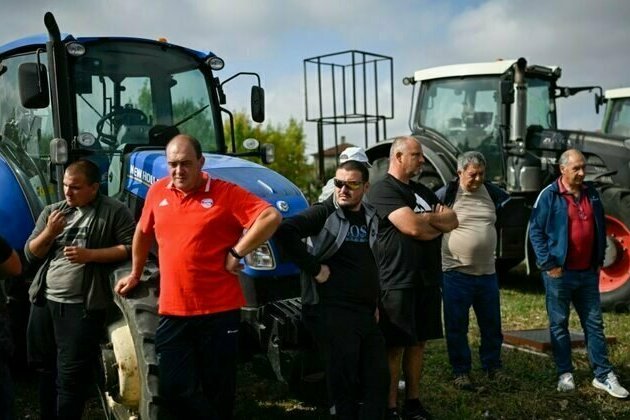
The ATMs offered a welcome income for Ukraine and an alternative avenue to export its agricultural products worldwide after the Kremlin blocked trade routes in the Black Sea. EU farmers, however, weren't overjoyed. Complaining that cheap Ukrainian food products were flooding local markets and creating unfair competition, farmers in many Central and Eastern European countries have periodically protested and blocked EU-Ukrainian borders over the last three years.
SEE ALSO:
Why EU-Ukraine Trade Is About To Get Less Free
Given the agricultural sector's strong political influence in Poland, Hungary, and Romania, the European Commission was forced to amend ATMs and introduce safeguard measures to limit imports of certain products from Ukraine once they had reached specific thresholds -- a brake that has been pulled numerous times recently.
In this new trade deal, the political clout of the EU farming lobby in Brussels is evident once again. In the updated EU proposal, there is a reference to the European Commission gathering "stakeholder opinions" on trade liberalization with Ukraine.
While the document doesn't reveal the identities of the responders, the majority of the submissions came from "associations and companies," with the document noting that "most submissions from stakeholders in the EU agri-food sector called for low to moderate increases in market access for imports from Ukraine, highlighting the disruptions they had experienced when imports could enter freely under the ATMs."
While Kyiv wanted the updated Deep and Comprehensive Free Trade Agreement to be as close to the ATM as possible, arguing that reverting fully to the old agreement could cost Ukraine 3 billion euros ($3.5 billion), it seems that once again the EU farmers have won the day.
To be clear, the deal is better for Kyiv than the original 2016 version, with Ukraine securing full access to the bloc for exports of products such as mushrooms, grape juice, processed milk products, yogurts, and kefirs. Ukraine's main export items such as sugar, poultry, eggs, wheat, maize, and honey can also be exported to the EU under bigger quotas than in 2016 but not the double or even fivefold increases that Kyiv was pushing for. Quotas for most meat products, such as beef, pork, and lamb, have been continued -- a loss for Ukraine as it will miss out on the extra income but a win for EU farmers wary of extra competition.
The deal is also a little harsher on Ukraine as it streamlines the process of halting Ukrainian imports. Previously, a group of countries could "pull the trigger" and call for a temporary stop of imports if a sudden spike was noticed. Now, it's enough for just one country to notify the European Commission.
Perhaps the biggest Ukrainian concession is its pledge to gradually align with various EU food and sanitary standards. This process will begin this year, requiring Kyiv to report yearly on what laws are being enacted. The full implementation of all the EU's rules and regulations are expected by the end of 2028.
SEE ALSO:
Kherson Farmers Battle Drones And Flames To Revive Iconic Watermelon Harvest
The European Commission proposal notes that "many stakeholders called for Ukraine's gradual alignment with EU production standards as well as a strong safeguard. Most individuals who replied were against any further trade liberalization with Ukraine before they align with more EU standards."
For Ukraine, such measures might be a hard pill to swallow. While the country is an official EU candidate country with hopes of joining the bloc in the future, it probably won't join by 2028. Implementing these reforms will be expensive and the costs will likely be borne by Ukrainian farmers. Given that Ukraine won't yet have full access to the EU market or benefit from EU agricultural funds, the reforms will be trickier to sell to Ukraine's agriculture sector.
While Hungary is currently blocking Kyivs path to the EU over Hungarian minority rights in Ukraine, most EU officials believe it will be the EU farm lobby that will slow Ukraine's bid down. Well over 300 billion euros, 25 percent of the EU budget, goes to agriculture, often in the form of direct aid to the bloc's farmers. That is money they the EU's farmers are unlikely to want to share with their Ukrainian counterparts anytime soon.
Get a daily dose of Germany Sun news through our daily email, its complimentary and keeps you fully up to date with world and business news as well.
Publish news of your business, community or sports group, personnel appointments, major event and more by submitting a news release to Germany Sun.
More InformationDUBLIN, Ireland: Ryanair, the Dublin-based airline, said it flew a record number of passengers in July, even though strikes in France...
MILAN, Italy: Giorgio Armani is facing renewed scrutiny over labor conditions in its supply chain after Italy's antitrust authority...
BERLIN, Germany: Luxury car brands Porsche and Aston Martin have raised vehicle prices in the U.S., as European carmakers brace for...
An updated trade deal between the European Union and Ukraine spells bad news for Kyiv, signals the power of the bloc's agricultural...
New Delhi [India], August 6 (ANI): Foreign affairs expert Subhash Goyal has criticised US President Donald Trump's decision to impose...
New Delhi [India], August 6 (ANI): The Global Trade Research Institute (GTRI) on Wednesday called the United States' decision to impose...
DUBLIN, Ireland: President Michael D. Higgins has issued a strong condemnation after the release of footage showing the emaciated bodies...
MILAN, Italy: European banks are well-positioned to absorb a significant economic downturn triggered by geopolitical conflict and a...
MILAN, Italy: Giorgio Armani is facing renewed scrutiny over labor conditions in its supply chain after Italy's antitrust authority...
DUBLIN, Ireland: Ireland's only privately-owned Thurles Racecourse announced on August 1 that it would cease operations immediately,...
DUBLIN, Ireland: Extreme online pornography is influencing some young men to see violence against women as normal, according to Garda...
Madrid [Spain], August 7 (ANI): Spain has likely decided to 'indefinitely' suspend its plans to purchase the United States-made fifth-generation...