Xinhua
30 Jan 2026, 02:45 GMT+10
As electrification and intelligent driving technologies accelerate change, the industry faces another pivotal moment, testing whether Germany's historic strengths can sustain competitiveness in a rapidly evolving global market.
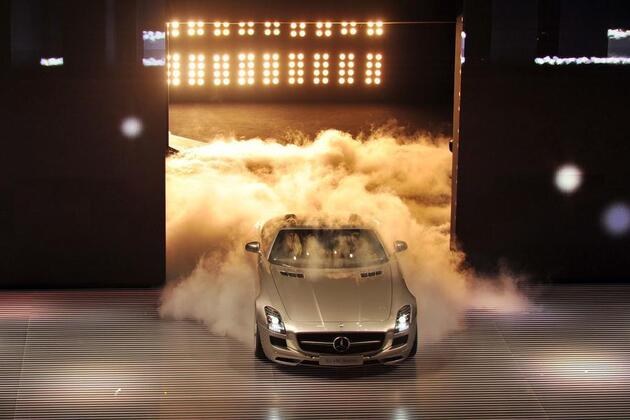
BERLIN, Jan. 29 (Xinhua) -- Germany's automobile industry, a cornerstone of the country's industrial success for more than a century, is entering a defining phase of transformation as electrification and intelligent technologies reshape the global car market.
The birth of the modern automobile is widely dated to Jan. 29, 1886, when German engineer Carl Benz patented his "vehicle powered by a gas engine." Since then, the industry has evolved in tandem with Germany's industrialization and remains one of its most important economic pillars.
As the birthplace of the modern car, Germany is still among the world's leading automobile producers. The country produced about 4.15 million passenger cars domestically in 2025, with around 3.17 million exported, according to the German Association of the Automotive Industry (VDA), which observes its 125th anniversary this year.
The automotive sector has long accounted for about one-fifth of the country's total industrial value added. In 2024, Germany's exports of automobiles and auto parts reached 264.1 billion euros (315.6 billion U.S. dollars), about 17 percent of the country's total exports, data from the Federal Statistical Office showed. By the end of the third quarter of 2025, around 721,400 people were employed in the auto sector, representing 13 percent of total industrial employment.
Germany also remains one of the most car-dense countries in the world. In 2024, Germany had 590 passenger cars per 1,000 inhabitants, according to VDA data.
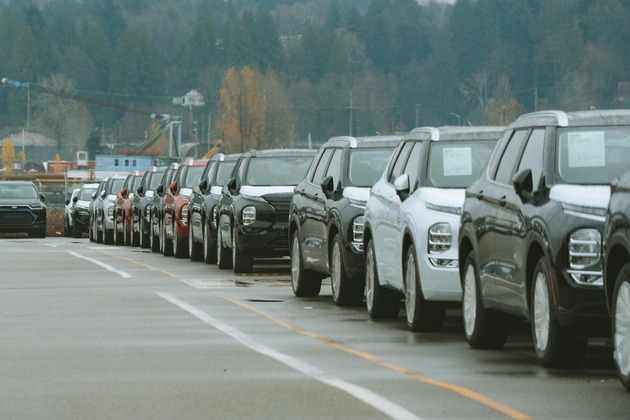
As an export-oriented economy, Germany relies heavily on overseas markets for its auto industry. More than three-quarters of German-made cars are exported, with the United States, Britain, and China among the most important destinations outside the European Union.
Despite this strength, the industry faces mounting pressures. German brands, including long-time market leader Volkswagen, increasingly compete at home with other European and Asian manufacturers, with Chinese new energy vehicle makers gaining ground.
Meanwhile, the transformation is creating new opportunities. Structural differences between Germany and China in engineering strengths and product development are opening space for complementary cooperation, particularly in the new energy vehicle sector, where China has emerged as a major global player.
Germany's long-accumulated advantages lie mainly in fundamental engineering and system-level research, including chassis technology, power systems and overall driving performance. These capabilities tend to shape vehicle development over longer cycles rather than deliver immediate market impact.
China's auto industry, by contrast, has advanced rapidly on the product side, especially in electrification platforms and intelligent systems that respond more directly to market demands and evolve at a faster pace.
In recent years, carmakers from both countries have expanded joint research and development efforts. Volkswagen, BMW and Mercedes-Benz have partnered with companies in China to develop intelligent technologies and software, while Chinese carmakers have established research and innovation centers in Germany to strengthen fundamental engineering and system capabilities.
Investment trends reflect this growing interdependence. According to a report by the German Economic Institute, German corporate investment in China rose to 7 billion euros in 2025, up from roughly 4.5 billion euros in both 2024 and 2023.
As electrification and intelligent driving technologies accelerate change, the industry faces another pivotal moment, testing whether Germany's historic strengths can sustain competitiveness in a rapidly evolving global market.
In this context, German-Chinese cooperation has become an important factor shaping industry dynamics. The Center Automotive Research Institute in Bochum said that the future of the auto industry lies in cooperation with China, according to a global passenger car market forecast report released last month. (1 euro = 1.19 U.S. dollar)
Get a daily dose of Germany Sun news through our daily email, its complimentary and keeps you fully up to date with world and business news as well.
Publish news of your business, community or sports group, personnel appointments, major event and more by submitting a news release to Germany Sun.
More InformationNEW DELHI/BRUSSELS: India is set to make its boldest move yet to open its tightly protected auto market, agreeing to sharply cut import...
As electrification and intelligent driving technologies accelerate change, the industry faces another pivotal moment, testing whether...
Thiruvanathapuram (Kerala) [India], January 29 (ANI): Congress MP Shashi Tharoor on Thursday described his recent meeting with Congress...
Shimla (Himachal Pradesh) [India], January 29 (ANI): Three ministers of the Himachal Pradesh government, Revenue, Horticulture and...
By Palash Srivastava New Delhi [India], January 29 (ANI): Sena Latif, Ambassador of Romania to India, hailed the India-European...
(Photo credit: Witters Sport-Imagn Images) The San Jose Earthquakes acquired forward Timo Werner from Bundesliga side Red Bull Leipzig...
DUBLIN, Ireland: The High Court awarded 80,000 euros in damages to a once-aspiring model, who quit her career after a laser hair-removal...
DUBLIN, Ireland: A Romanian national who worked as a refuse worker has been accused of targeting mainly elderly women, including a...
PARIS/MILAN: As Europe's media sector consolidates to counter the growing dominance of U.S. streaming platforms, French broadcaster...
NEW DELHI/BRUSSELS: India is set to make its boldest move yet to open its tightly protected auto market, agreeing to sharply cut import...
DUBLIN, Ireland: Protesters gathered on Dublin's O'Connell Street over the weekend, demanding the expulsion of Iranian diplomats. ...
DUBLIN, Ireland: Infant milk formula batches produced by French food and beverage maker Danone were being recalled from targeted markets...