Xinhua
10 Mar 2026, 05:15 GMT+10
The surge in wholesale energy prices is quickly feeding into consumer costs across Europe. Analysts warn the shock could extend beyond household energy bills if the conflict drags on.
LONDON, March 9 (Xinhua) -- A sharp rise in oil and gas prices amid escalating tensions in the Middle East and fears that the Israel-United States war on Iran could disrupt supplies through the Strait of Hormuz is intensifying Europe's cost-of-living pressures.
Brent crude, the international benchmark, briefly climbed to around 119 U.S. dollars per barrel on Monday, its highest level since mid-2022, before retreating below the 100-dollar mark later in the session.
European natural gas prices also jumped sharply, with Dutch TTF natural gas futures for April delivery rising 11.59 percent to 59.57 euros (69.31 U.S. dollars) per megawatt-hour, an increase of 86.4 percent from 31.96 euros (37.19 dollars) on Feb. 27.
SOARING ENERGY PRICES SQUEEZE HOUSEHOLDS
The surge in wholesale energy prices is quickly feeding into consumer costs across Europe.
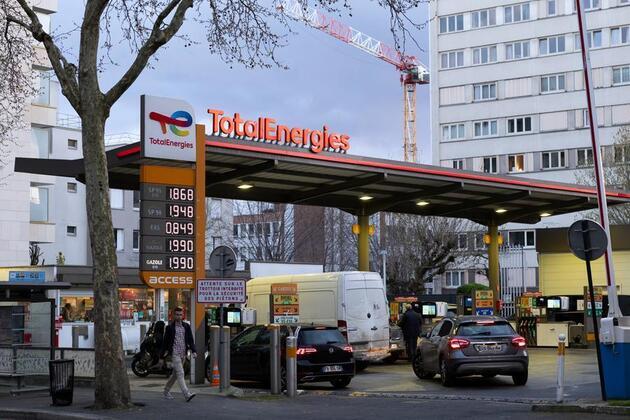
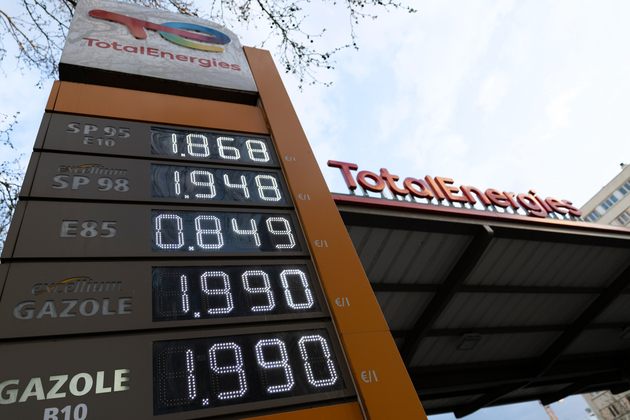
Fuel prices have already risen sharply in several countries. In France, diesel reached the symbolic threshold of 2 euros (2.33 dollars) per litre on Monday for the first time since the summer of 2022. In Bulgaria, fuel prices have risen by around 10 euro cents (0.12 dollar) per litre since early March, with diesel posting the largest increase. In Bosnia and Herzegovina (BiH), diesel prices reported the biggest increase in the Republika Srpska entity, with a 25 percent hike since early March.
As prices climb, drivers in several cities have begun refueling early. In The Hague, Xinhua reporters observed heavier traffic at fuel stations while long lines of cars waited at a Galp station in Lisbon's Amadora district.
Rising prices have also triggered cross-border fuel shopping. Dutch motorists were reported lining up in Zelzate, Belgium, while some German drivers are traveling to Poland, the Czech Republic and Luxembourg to take advantage of cheaper fuel. German Federal Police spokesperson Marcel Pretzsch confirmed the increase in "small-scale cross-border traffic."
GOVERNMENTS' RESPONSIVE MEASURES
As energy costs surge and public concern grows, governments across Europe are assessing measures to mitigate the impact on households and businesses.
During a videoconference meeting between G7 finance ministers and the International Energy Agency (IEA), policymakers discussed potential responses to deteriorating energy markets, including the possible release of emergency oil reserves.
IEA Executive Director Fatih Birol warned that disruptions to transit through the Strait of Hormuz and possible production curtailments pose "significant and growing risks" to global oil markets. He said the meeting examined all available options, including making the IEA's emergency oil stocks available to the market.
French Economy Minister Roland Lescure said governments were ready to take necessary steps, including tapping strategic reserves, though he stressed that "we are not there yet."
According to the IEA, member countries must hold oil stocks equivalent to at least 90 days of net imports. France held reserves covering about 122 days of net imports as of November 2025.
Several countries have already taken domestic steps. Serbia suspended exports of crude oil and fuel products until March 19 to prevent shortages. Croatia and Hungary introduced temporary caps on retail fuel prices. In Italy, the government is studying whether to activate so-called "mobile excise duties," a mechanism designed to offset rising pump prices.
INFLATIONARY SHOCK BEYOND ENERGY BILLS
For households, the impact could become more immediate if energy prices remain high.
In the Netherlands, comparison platform Overstappen.nl said the average monthly energy cost for a two-person household signing a new fixed-term contract rose by around 36 euros within a week.
In Britain, the Resolution Foundation warned that sustained increases in oil and gas prices could add about one percentage point to inflation and roughly 500 pounds (671.42 dollars) to typical annual household energy bills, with lower-income households likely to be hit hardest.
Analysts warn the shock could extend beyond household energy bills if the conflict drags on.
Portuguese energy expert and former Economy Minister Antonio Costa Silva criticized the United States' role in the conflict, calling the actions of the U.S. administration "completely irresponsible." He warned that a prolonged conflict could push energy prices even higher and trigger a major inflationary shock.
Supply risks remain a central concern. Warren Patterson, head of commodity strategy at ING Bank, said the longer disruptions continue, the more supply is likely to be shut in. Even if shipping through the Strait of Hormuz resumes, upstream production would take time to recover.
Wolfgang Grosse Entrup, head of the German Chemical Industry Association, warned that rising energy and raw material costs are weighing on global industry and could push inflation higher while slowing growth. Nobel laureate in economics Philippe Aghion similarly cautioned that "a prolonged conflict will reduce global growth."
The Institute of the German Economy (IW) estimates that if oil prices reach 100 dollars per barrel, Germany's GDP would fall by 0.3 percent this year and by 0.6 percent in 2027, resulting in losses of about 40 billion euros (46.56 billion dollars) over the two years. If oil price rises to 150 dollars a barrel and remains there, the losses could exceed 80 billion euros (93.12 billion dollars).
Get a daily dose of Germany Sun news through our daily email, its complimentary and keeps you fully up to date with world and business news as well.
Publish news of your business, community or sports group, personnel appointments, major event and more by submitting a news release to Germany Sun.
More InformationDUBLIN, Ireland: From March 1, new tenants have been offered a six-year tenancy, providing them with greater protection, the rental...
The surge in wholesale energy prices is quickly feeding into consumer costs across Europe. Analysts warn the shock could extend beyond...
(260309) -- PARIS, March 9, 2026 (Xinhua) -- Photo taken on March 9, 2026 shows a price board at a gas station in Paris, France. The...
Brent crude, the international benchmark, surged to around 119.5 dollars per barrel in intraday trading, its highest level since mid-2022,...
The bloc has given Kiev 195 billion in aid since 2022, top diplomat Kaja Kallas has said The European Union has spent €195 billion...
BRUSSELS, 9th March, 2026 (WAM) -- The European Union has affirmed its solidarity with the countries and peoples of the region, renewing...
KYIV, Ukraine: Ukrainian manufacturers of interceptor drones say they are ready to export large volumes of the systems as demand rises...
DUBLIN, Ireland: A researcher will be paid 270,000 euros by the Department of Justice, Home Affairs and Migration, to write a history...
HONG KONG: Gulf airlines have begun restoring limited flight operations from the United Arab Emirates, but missile threats and widespread...
DUBLIN, Ireland: A jealous double-murderer who killed his wife and her alleged lover will challenge a decision by the Minister for...
DUBAI, U.A.E: Even as thousands of airline passengers are stranded across the Gulf region due to the war, some wealthy travelers are...
MELBOURNE, Victoria, Australia - In a landmark international police operation, the forensic analysis of two mobile phones seized in...